
 |
| DEP pic |
Oh, woe! Here we go again: Another cruel and
needless dog death in Sparta, NJ, reportedly by a bear. RIP, poor innocent Tommy! What a shame if your owner didn’t look around
before letting you out last Wednesday night.
Were there outdoor lights on? Living in bear territory, did your owner look
out for you once you were outside? Was a
bear around because your owner, and possibly neighbors too, has attracted bears
to the area by careless trash disposal?
The Times of Trenton story
included a link to DEP safety tips (nj.gov/dep/fgw/bearfacts_safetytips.htm). I
skimmed them but didn’t see anything about bear-proof trash cans, long
recommended for use to deter bears.
Conservation-by-teamwork
Last fall’s expo by the Wildlife Conservation
Network surprised me with one piece of news: Kenyan elephants are now less
threatened by poachers than by people living – and growing crops and building
roads, railways and bridges – on shared
land areas.
This reality stressed the importance
of experts engaging with local people to
help them co-exist with animals sharing their territory.
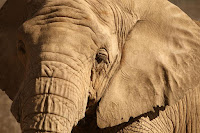
To protect both the elephants and the
people’s way of life, conservationists partner with local residents, working
with them at grass roots levels to assure and maintain elephant migration
corridors as human development increases along with population growth.
Collaboration among organizations
having to do with elephants aims to remind local people how to live with animals
to avoid conflict. (Earlier blog posts here described jointly-developed ways to
deter elephants from raiding crop gardens and other “people projects.”)
Also in Kenya, efforts to keep lions
from going after livestock have included widespread planting of grasses for
them. “Saving livestock from lions is
saving the lions!” one person exclaimed.

Meanwhile, in Mozambique, assuring that
people have the power of decision-making that they had historically practiced,
has helped break down walls between the interest groups involved. In short, co-existence between people and
animals is vital for wildlife welfare.
“Outside” experts working with local communities
toward mutual goals and involving those to be affected by decisions in their
development – these two principles are not unique to Africa. In fact, they are established management
techniques in the US.
Heroes for animals
And since I’ve asked blog readers to
identify “heroes for animals” they know of, I’m suggesting a couple myself
right now. They are members of a
statewide animal advocacy organization, the Animal Protection League of NJ, now nearing 40 years of active advocacy for our state’s animals.
It’s one thing for a person to be an
organization member, period. It’s quite
another for a member to work far, far beyond expectations on behalf of
animals. For instance, one APLNJ member
attended over 50 town meetings to advocate for non-lethal goose management!
 |
| “D’s goose” |
Just imagine spending numerous evenings
meeting with town reps to talk up ways to manage geese without killing them. And “D” got goose-saving positive
results – as well as geese who came to recognize her and seemingly showed their
thanks when they approached her.
works on positioning billboards on animal issues around the state and jumps
right in on other special projects.
“powers that be” to devise a unified plan — and carry it out — for a spay and neuter program for a
30-cat colony. “S” also built an
indoor-outdoor “catio” at her home to assure that cats needing it could be
comfortably isolated from others.
These are only two stellar APLNJ
members who are “heroes for animals.” You
can count on reading about still others here too.

(To support this organization’s
continuing work for all New Jersey animals, but especially for those persecuted
as “invasive” or unwanted, please make a
tax-deductible online donation at APLNJ.org.
Thank you!)
#
Back to you, readers. Please tell us about a “hero for animals” you
know. Just go to 1moreonce.blogspot.com.
